NSHM25 Puerto Rico & U.S. Virgin Islands ERF paper published
I led development of a new earthquake rupture forecast (ERF) for Puerto Rico and the U.S. Virgin Islands (PRVI), part of the 2025 update to the National Seismic Hazard Model (NSHM25) for that region. This is the first update to the NSHM for PRVI since 2002 and incorporates new data and methodologies.
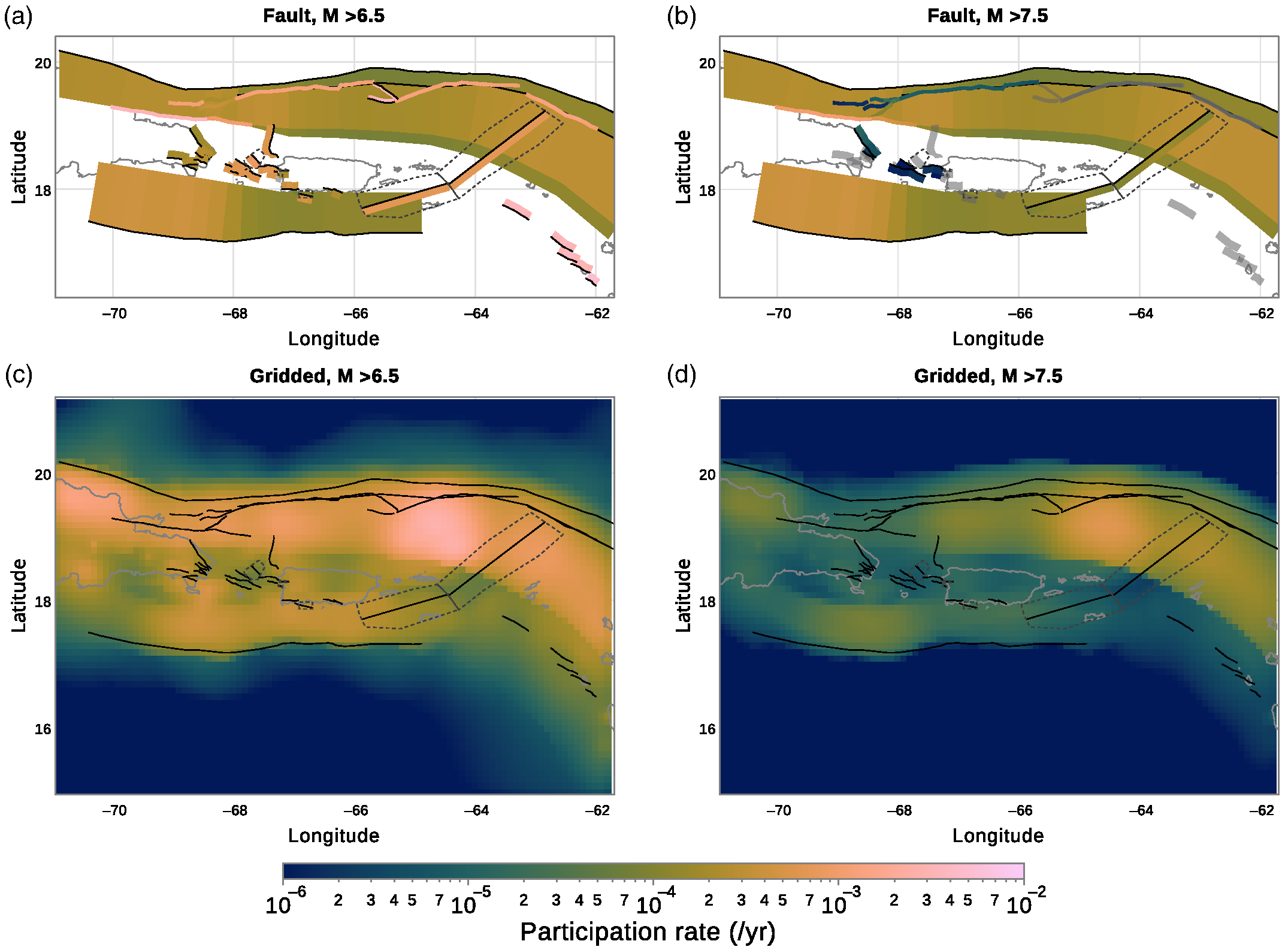
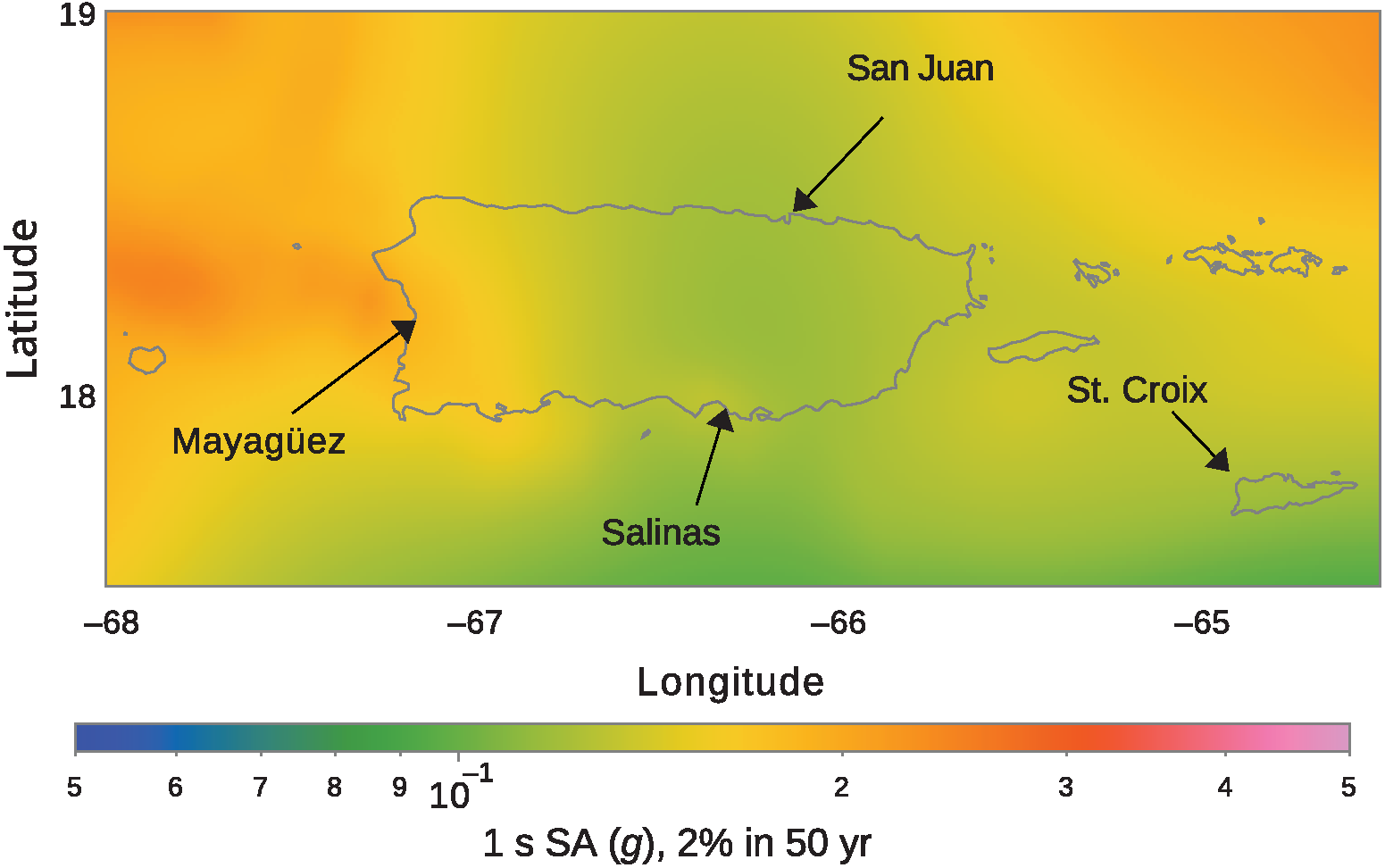
The paper on the ERF was recently published in BSSA, give it a read here, or see the abstract and selected figures below. Stay tuned for a formal press release from the USGS and publication of the NSHM overview paper.
K. R. Milner, A. E. Hatem, R. W. Briggs, J. A. Thompson‐Jobe, A. L. Llenos, A. J. Michael, A. M. Shumway, E. H. Field, and K. L. Haynie, “The U.S. Geological Survey 2025 Puerto Rico and U.S. Virgin Islands Time‐Independent Earthquake Rupture Forecast,” Bulletin of the Seismological Society of America, Mar. 2026, doi: 10.1785/0120250040
Abstract
We present the 2025 U.S. Geological Survey Puerto Rico and U.S. Virgin Islands (PRVI) time‐independent earthquake rupture forecast (ERF), developed for the 2025 update to the National Seismic Hazard Model (NSHM) for PRVI. The updated ERF improves upon a prior model from 2003, including an expanded fault inventory with slip‐rate estimates, updated seismicity catalogs, and refined subduction zone geometries and deformation models. It applies the fault‐system inversion methodology to solve for rates of ruptures on modeled faults, adapted from the 2023 NSHM (NSHM23) for the western United States, including the first application of the inversion to model rates on a U.S. subduction interface. Off‐fault and intraslab seismicity are constrained by observed seismicity and use updated methods developed for NSHM23. Uncertainties in model components are substantial, and the ERF represents epistemic uncertainties through a comprehensive logic tree consisting of 1.7 billion logic‐tree branches combined across all sources.